
Ch10 Design Pattern
Yang Haoran 11/7/2023 Go
# Design Pattern
# 建造者模式
在 JAVA 中,可以通过方法重载的方式,实现同一个构造器方法对应多个不同的入参组合,可以在一定程度上缓解这个问题;但是在 Golang 中,每个方法的入参类型以及组合是确定的,这样就可能导致类的构造器方法数量发生膨胀,产生大量的冗余方法和代码.
# 经典模式
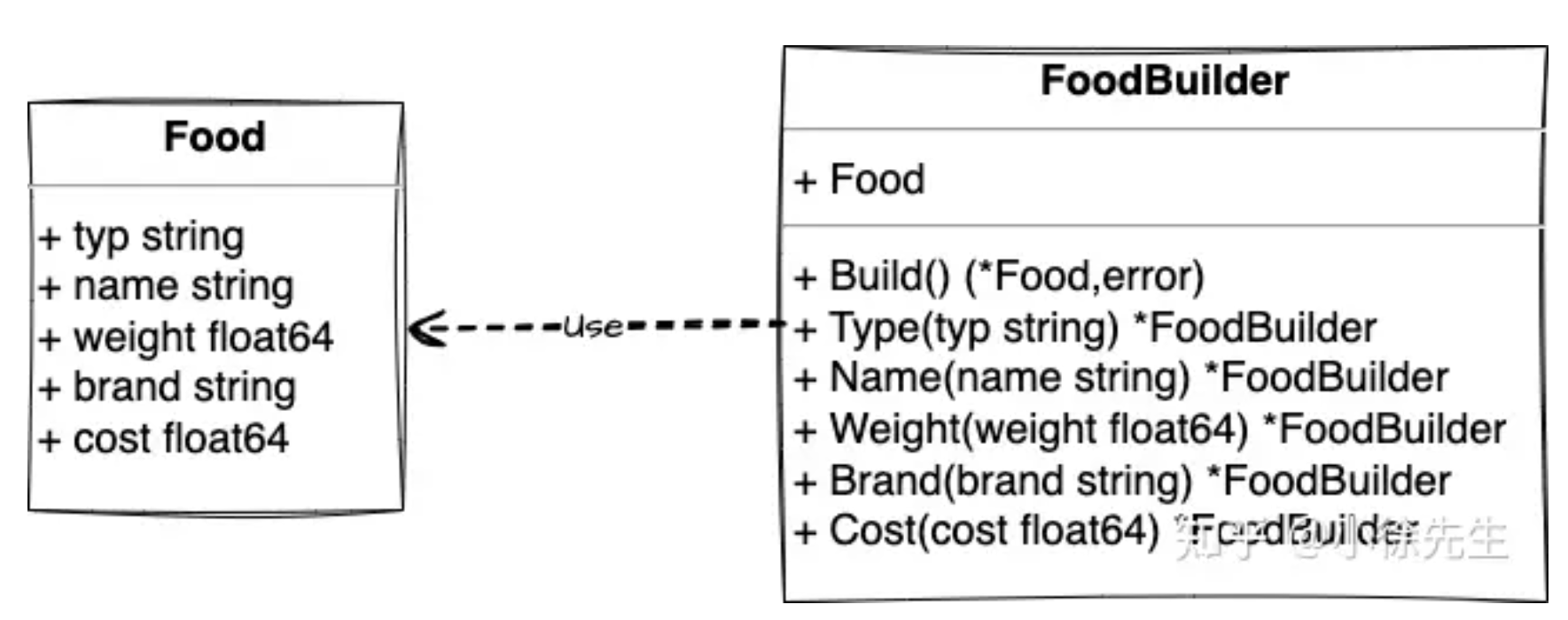
type Food struct {
    // 种类
    typ string
    // 名称
    name string
    // 重量
    weight float64
    // 品牌
    brand string
    // 价格
    cost float64
}

func NewFood(typ string, name string, weight float64, brand string, cost float64) *Food {
    return &Food{
        typ:    typ,
        name:   name,
        weight: weight,
        brand:  brand,
        cost:   cost,
    }
}

type FoodBuilder struct {
    Food
}


func NewFoodBuilder() *FoodBuilder {
    return &FoodBuilder{}
}

func (f *FoodBuilder) Build() (*Food, error) {
    if f.typ == "" {
        return nil, errors.New("miss type info")
    }
    if f.name == "" {
        return nil, errors.New("miss name info")
    }


    return &Food{
        typ:    f.typ,
        name:   f.name,
        brand:  f.brand,
        weight: f.weight,
        cost:   f.cost,
    }, nil
}

func (f *FoodBuilder) Type(typ string) *FoodBuilder {
    f.typ = typ
    return f
}


func (f *FoodBuilder) Name(name string) *FoodBuilder {
    f.name = name
    return f
}


func (f *FoodBuilder) Weight(weight float64) *FoodBuilder {
    f.weight = weight
    return f
}


func (f *FoodBuilder) Brand(brand string) *FoodBuilder {
    f.brand = brand
    return f
}


func (f *FoodBuilder) Cost(cost float64) *FoodBuilder {
    f.cost = cost
    return f
}
1
2
3
4
5
6
7
8
9
10
11
12
13
14
15
16
17
18
19
20
21
22
23
24
25
26
27
28
29
30
31
32
33
34
35
36
37
38
39
40
41
42
43
44
45
46
47
48
49
50
51
52
53
54
55
56
57
58
59
60
61
62
63
64
65
66
67
68
69
70
71
72
73
74
75
76
77
78
2
3
4
5
6
7
8
9
10
11
12
13
14
15
16
17
18
19
20
21
22
23
24
25
26
27
28
29
30
31
32
33
34
35
36
37
38
39
40
41
42
43
44
45
46
47
48
49
50
51
52
53
54
55
56
57
58
59
60
61
62
63
64
65
66
67
68
69
70
71
72
73
74
75
76
77
78
Test:
func Test_Builder(t *testing.T) {
    // 创建 Food 建造者实例
    fb := NewFoodBuilder()
    // 通过链式调用完成属性设置与实例建造
    food1, err := fb.Type("苹果").Cost(12.12).Brand("山东红富士").Build()
    if err != nil {
        t.Error(err)
    } else {
        t.Logf("food: %+v", food1)
    }


    // 通过链式调用完成属性设置与实例建造
    food2, err := fb.Type("芒果").Name("我是大芒果1号").Cost(30.30).Build()
    if err != nil {
        t.Error(err)
    } else {
        t.Logf("food: %+v", food2)
    }
}
1
2
3
4
5
6
7
8
9
10
11
12
13
14
15
16
17
18
19
20
21
2
3
4
5
6
7
8
9
10
11
12
13
14
15
16
17
18
19
20
21
# Option模式
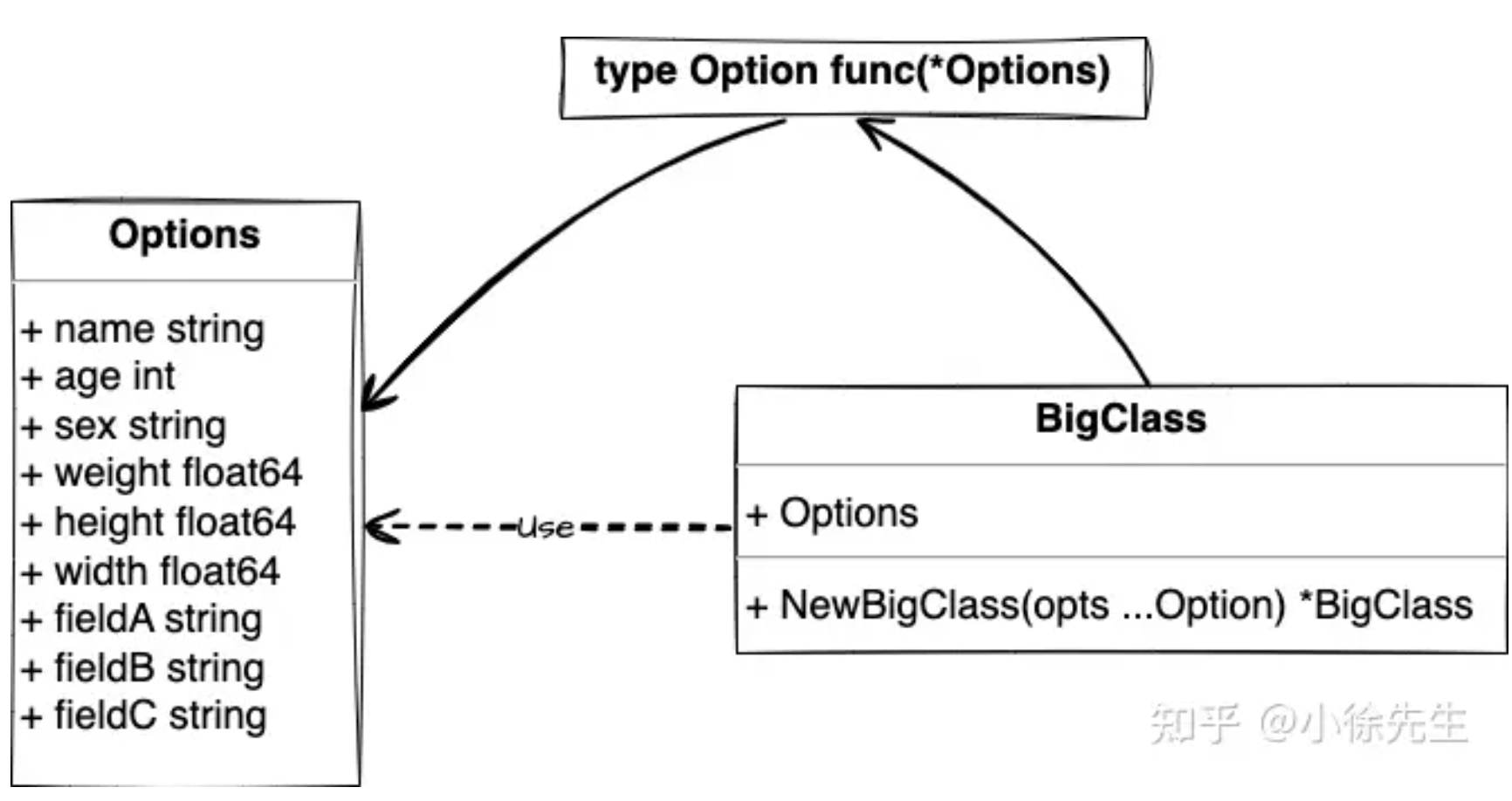
type BigClass struct {
    Options
}


type Options struct {
    name   string
    age    int
    sex    string
    weight float64
    height float64
    width  float64
    fieldA string
    fieldB string
    fieldC string
}

type Option func(opts *Options)

func WithName(name string) Option {
    return func(opts *Options) {
        opts.name = name
    }
}


func WithAge(age int) Option {
    return func(opts *Options) {
        opts.age = age
    }
}


func WithSex(sex string) Option {
    return func(opts *Options) {
        opts.sex = sex
    }
}

...

//兜底修复方法 repair,完成构造 BigClass 实例过程中一些缺省值的设置. 比如用户如果没有通过 Option 显式设置 BigClass 中的 name 和 age 字段,则会通过 repair 方法将其设置为兜底的默认值.

func repair(opts *Options) {
    if opts.name == "" {
        opts.name = "小明"
    }
    if opts.age == 0 {
        opts.age = 20
    }
}

func NewBigClass(opts ...Option) *BigClass {
    bigClass := BigClass{}
    for _, opt := range opts {
        opt(&bigClass.Options)
    }


    repair(&bigClass.Options)
    return &bigClass
}
1
2
3
4
5
6
7
8
9
10
11
12
13
14
15
16
17
18
19
20
21
22
23
24
25
26
27
28
29
30
31
32
33
34
35
36
37
38
39
40
41
42
43
44
45
46
47
48
49
50
51
52
53
54
55
56
57
58
59
60
61
62
63
64
2
3
4
5
6
7
8
9
10
11
12
13
14
15
16
17
18
19
20
21
22
23
24
25
26
27
28
29
30
31
32
33
34
35
36
37
38
39
40
41
42
43
44
45
46
47
48
49
50
51
52
53
54
55
56
57
58
59
60
61
62
63
64
Test:
func Test_options_builder(t *testing.T) {
    bigClass1 := NewBigClass()
    bigClass2 := NewBigClass(WithAge(20), WithName("小乌龟"))
    bigClass3 := NewBigClass(WithHeight(180), WithWidth(200), WithFieldA("aaa"), WithFieldB("bbb"))
    t.Logf("bigClass1: %+v", bigClass1)
    t.Logf("bigClass2: %+v", bigClass2)
    t.Logf("bigClass3: %+v", bigClass3)
}
1
2
3
4
5
6
7
8
9
2
3
4
5
6
7
8
9
# 使用场景
这种 Options 建造者模式除了可以应用在构造器场景之外,我个人还总结了另一类适用场景——DB 条件查询.
我们在查询 user 的时候,可能会使用到多种组合的查询条件.
比如,我们可以通过主键 id 作为查询条件,可以通过名称 name 作为查询条件,可以通过名称 name +年龄 age 作为联合查询 (opens new window)条件,也可以通过年龄 age + 城市 cityID + 创建时间create_time 作为联合查询条件,凡此种种,组合数不胜枚举.
例子:gorm.DB
type Option func(db *gorm.DB) *gorm.DB


作者:小徐先生
链接:https://www.zhihu.com/question/21857130/answer/3118865556
来源:知乎
著作权归作者所有。商业转载请联系作者获得授权,非商业转载请注明出处。

func WithID(id int64) Option {
    return func(db *gorm.DB) *gorm.DB {
        return db.Where("id = ?", id)
    }
}


func WithName(name string) Option {
    return func(db *gorm.DB) *gorm.DB {
        return db.Where("name = ?", name)
    }
}


func WithAge(age int64) Option {
    return func(db *gorm.DB) *gorm.DB {
        return db.Where("age = ?", age)
    }
}


func WithCityID(cityID int) Option {
    return func(db *gorm.DB) *gorm.DB {
        return db.Where("city_id = ?", cityID)
    }
}


func WithPhone(phone string) Option {
    return func(db *gorm.DB) *gorm.DB {
        return db.Where("phone = ?", phone)
    }
}


func WithCreateTime(begin, end time.Time) Option {
    return func(db *gorm.DB) *gorm.DB {
        return db.Where("create_time >= ? and create_time <= end", begin, end)
    }
}
1
2
3
4
5
6
7
8
9
10
11
12
13
14
15
16
17
18
19
20
21
22
23
24
25
26
27
28
29
30
31
32
33
34
35
36
37
38
39
40
41
42
43
44
45
46
47
48
2
3
4
5
6
7
8
9
10
11
12
13
14
15
16
17
18
19
20
21
22
23
24
25
26
27
28
29
30
31
32
33
34
35
36
37
38
39
40
41
42
43
44
45
46
47
48
使用:
func (u *UserDAO) GetUser(ctx context.Context, opts ...Option) (*User, error) {
    db := u.db.WithContext(ctx).Model(&User{})
    for _, opt := range opts {
        db = opt(db)
    }
    var user User
    return &user, db.First(&user).Error
}
1
2
3
4
5
6
7
8
9
2
3
4
5
6
7
8
9
# 单例模式
# 饿汉
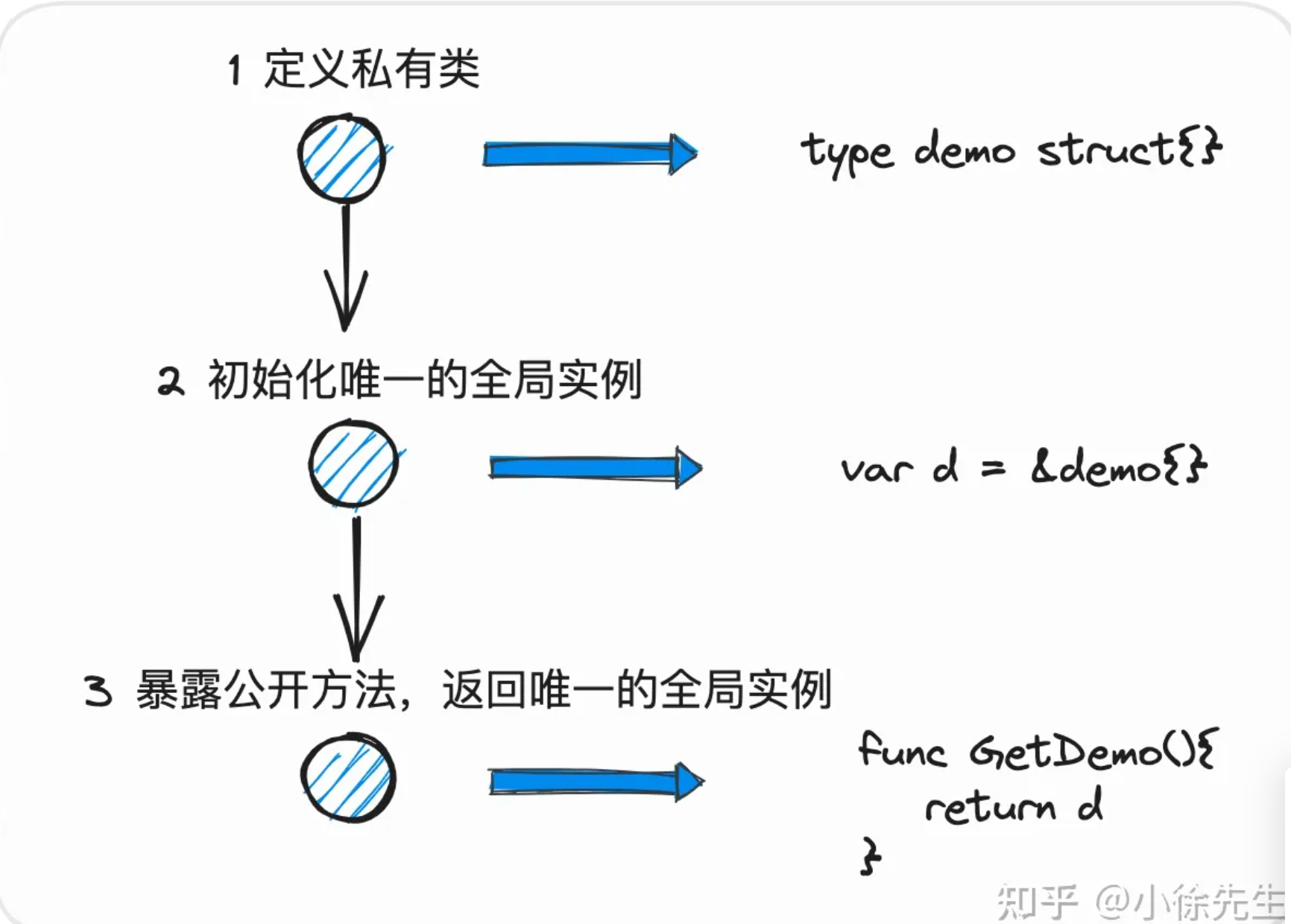
package singleton

var s *singleton

func init() {
    s = newSingleton()
}

type singleton struct {
}

func newSingleton() *singleton {
    return &singleton{}
}

func (s *singleton) Work() {
}

func GetInstance() *singleton {
    return s
}
1
2
3
4
5
6
7
8
9
10
11
12
13
14
15
16
17
18
19
20
21
2
3
4
5
6
7
8
9
10
11
12
13
14
15
16
17
18
19
20
21
存在一个比较容易引起争议的规范性问题,就是在对外可导出的 GetInstance 方法中,返回了不可导出的类型 singleton
规范的处理方式是,在不可导出单例类 singleton 的基础上包括一层接口 interface,将其作为对对导出方法 GetInstance 的返回参数类型:
type Instance interface {
    Work()
}

func GetInstance() Instance {
    return s
}
1
2
3
4
5
6
7
# 懒汉
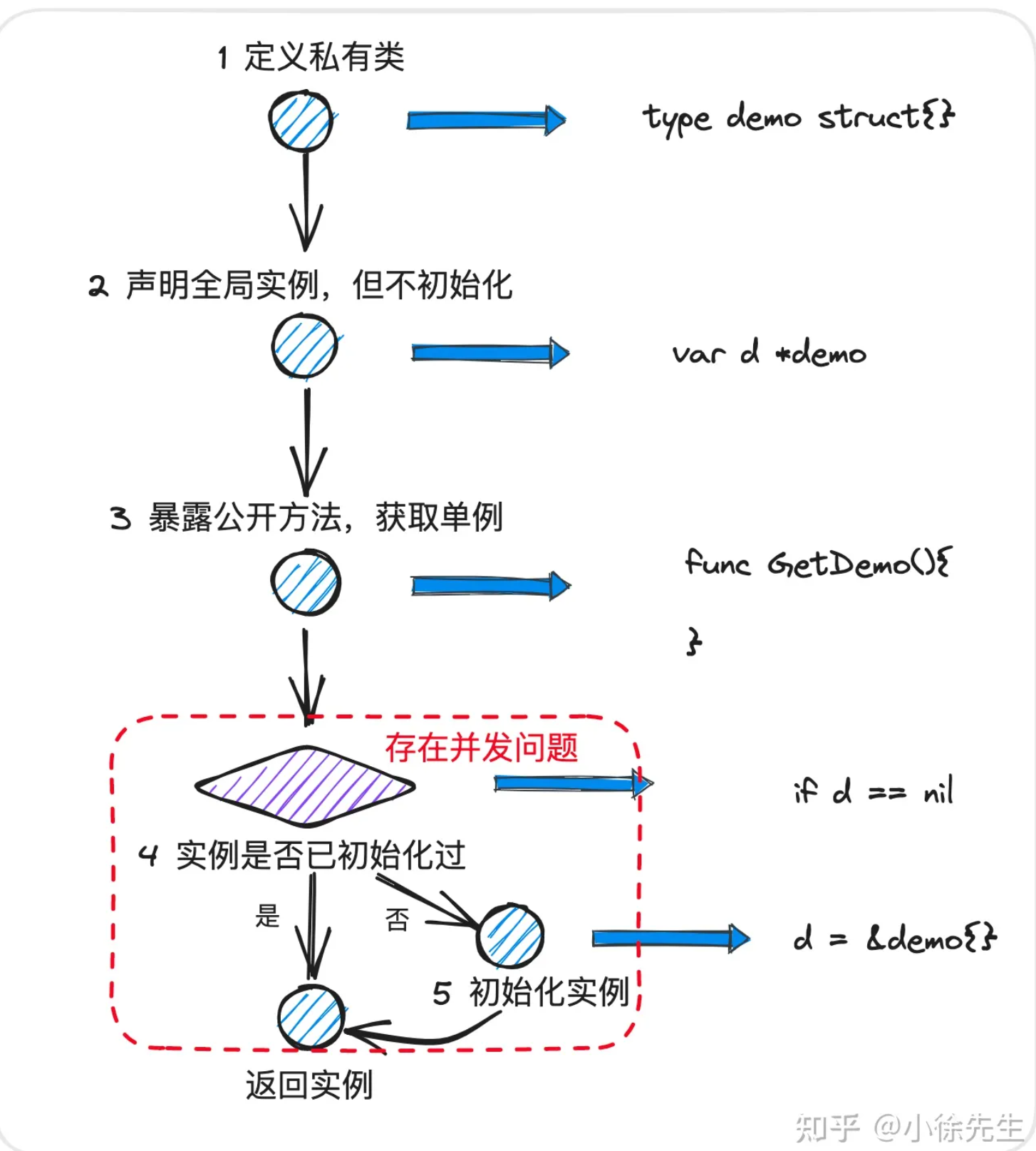
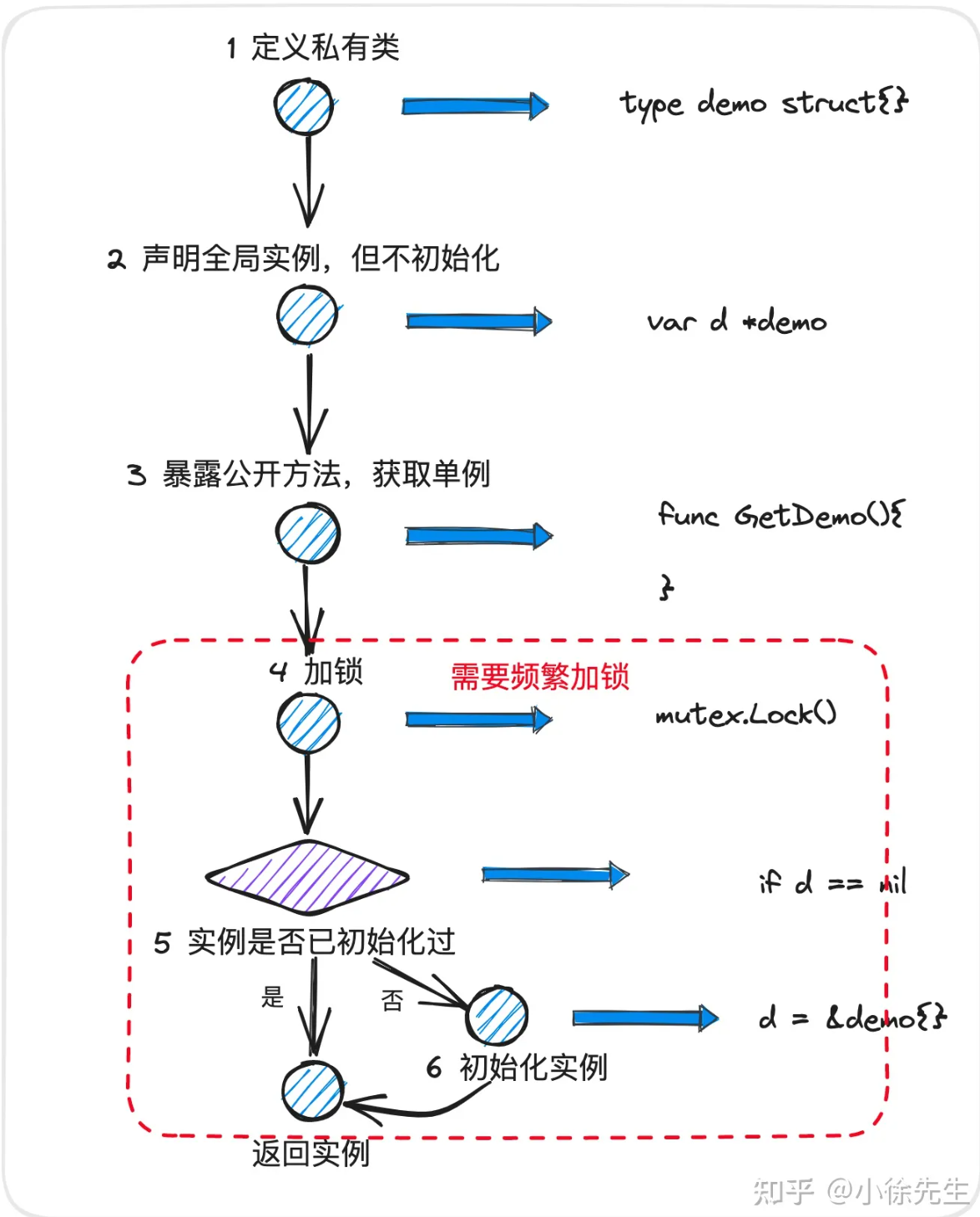
- 单例类声明为不可导出类型,避免被外界直接获取到
- 声明一个全局单例变量, 但不进行初始化(注意只声明,不初始化)
- 暴露一个对外公开的方法,用于获取这个单例
- 在这个获取方法被调用时,会判断单例是否初始化过,倘若没有,则在此时才完成初始化工作
# 1.0
# 2.0
# 3.0
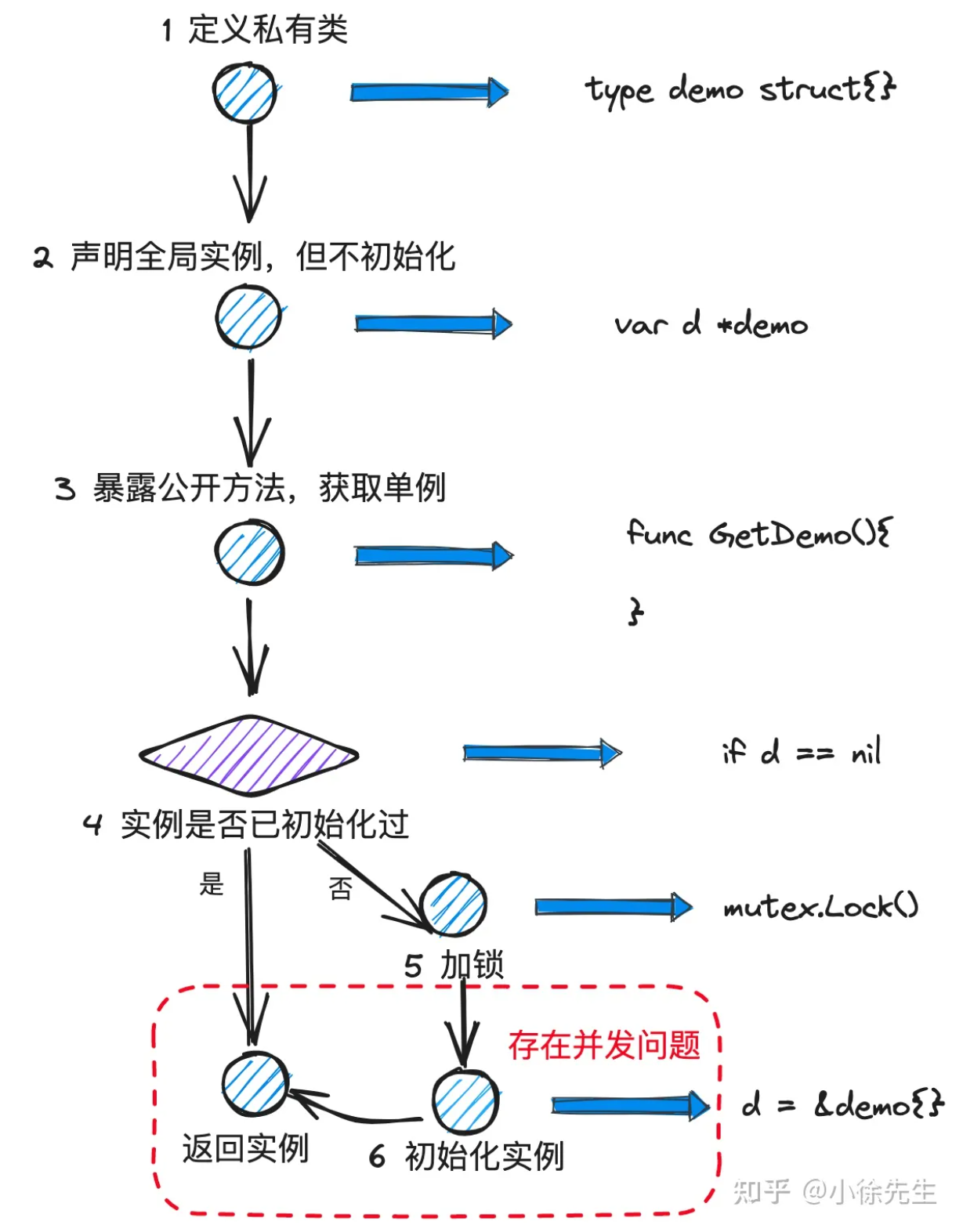
- moment1:单例 singleton 至今为止没有被初始化过
- moment2:goroutine A 和 goroutine B 同时调用 GetInstance 获取单例,由于当前 singleton 没初始化过,于是两个 goroutine 都未走进 if s != nil 的分支,而是开始抢锁
- moment3:goroutine A 抢锁成功继续往下;goroutine B 抢锁失败,进行等锁
- moment4:goroutine A 完成 singleton 初始化,并释放锁
- moment5:由于锁被释放,goroutine B 取锁成功,并继续往下执行,完成 singleton 的初始化
# 4.0
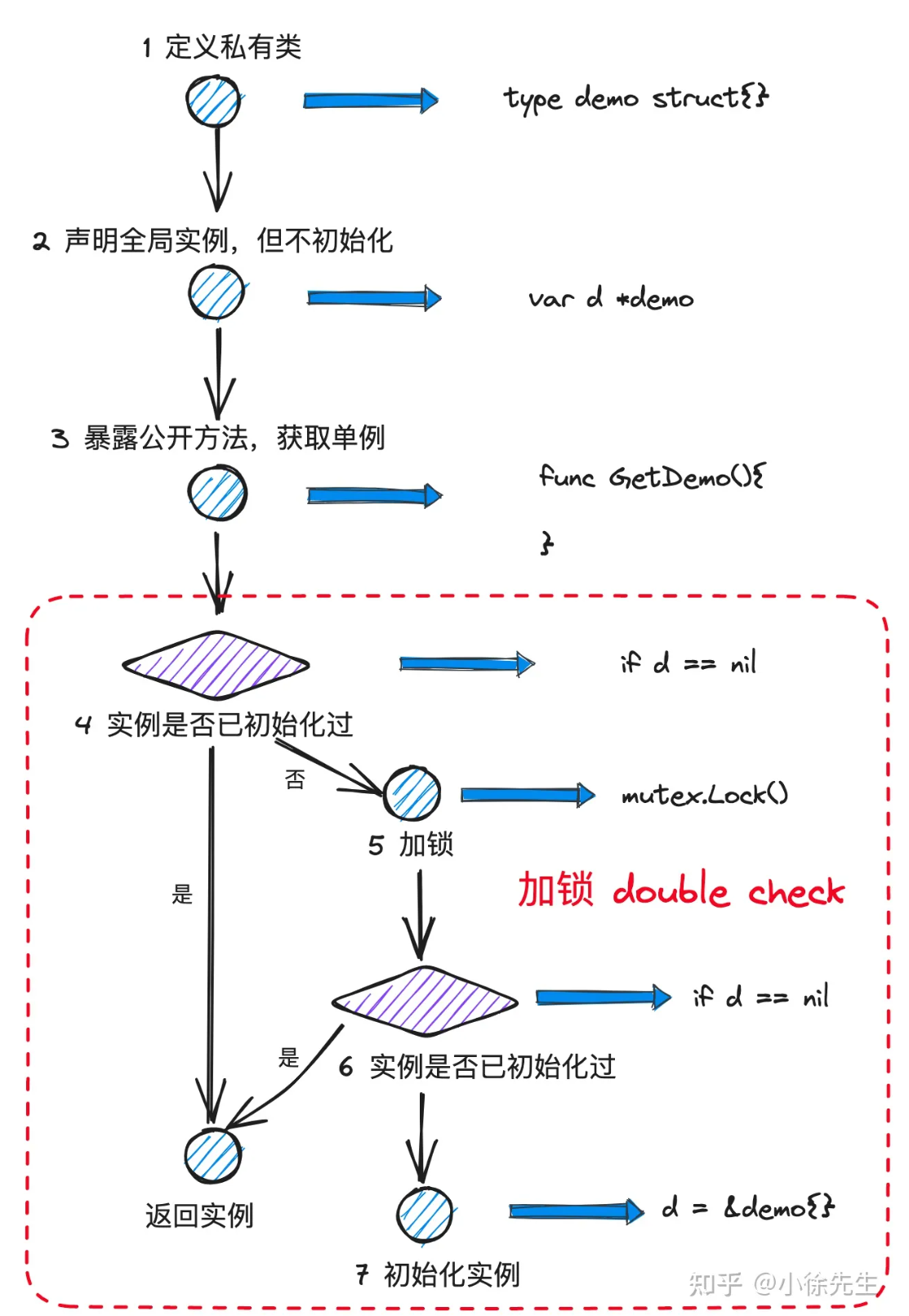
- 加锁之后多了一次 double check 动作
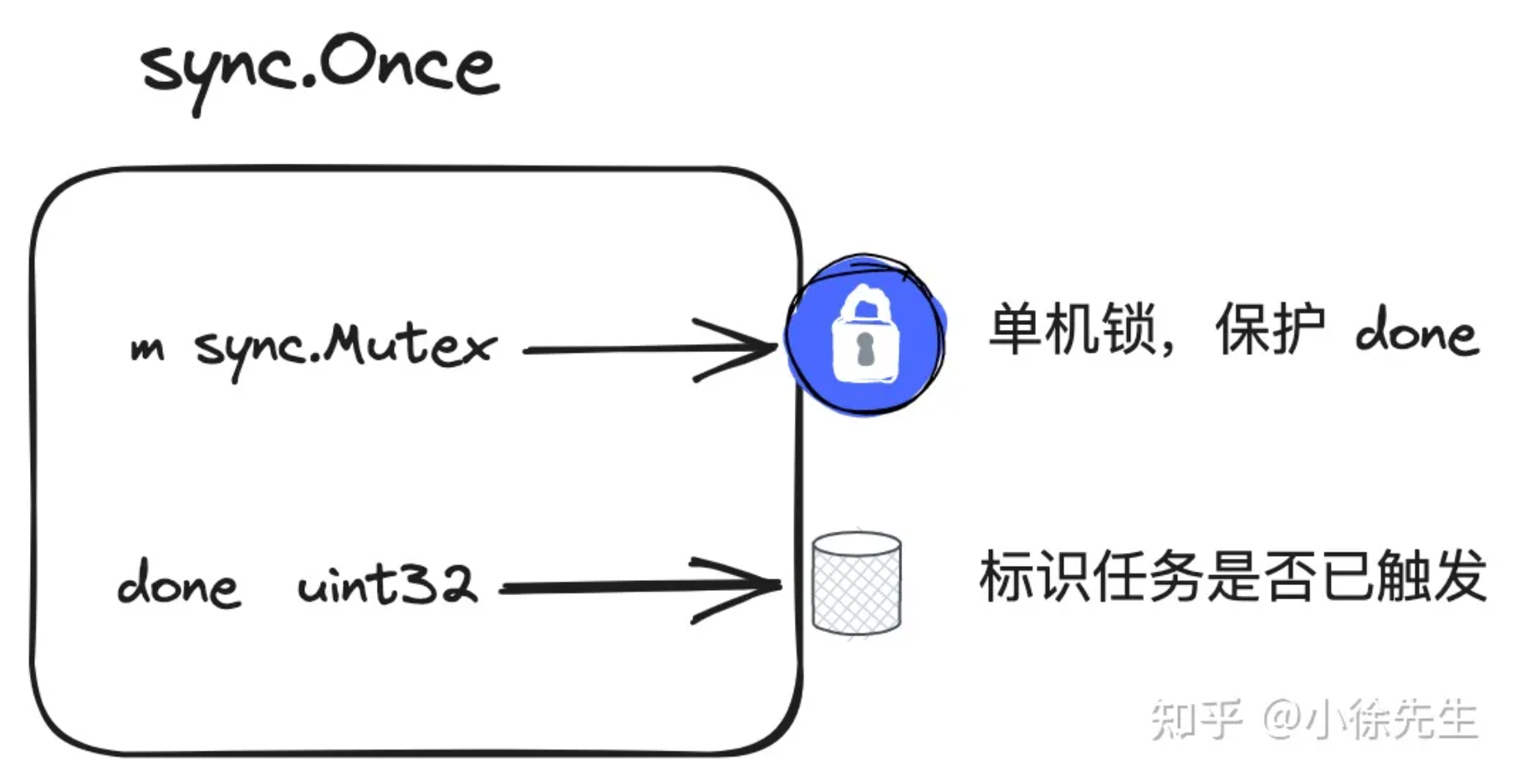
# 5.0: Go提供的源码
sync.Once 是 Golang 提供的用于支持实现单例模式的标准库工具,其对应的数据结构如下:
ref:https://www.zhihu.com/question/21857130/answer/3118865556